
By Fathima Kadhija Mohamed*
TOKYO, Japan | 9 Dec 2025 (IDN) — Within the complex realm of international relations, nation-states move forward with foreign policies and build vital connections by utilising theoretical frameworks that assist in predicting the behaviour of other actors on the world stage. The most renowned of these are realism and liberalism.
Realism holds that the international order is anarchic and that states, as the fundamental actors in world politics, are autonomous and have the right to decide their internal affairs based on self-interest for survival.
Liberalism, in contrast, aspires to promote ideals of order, liberty, justice, and toleration, with individuals and private corporations being the fundamental actors in world politics rather than states.
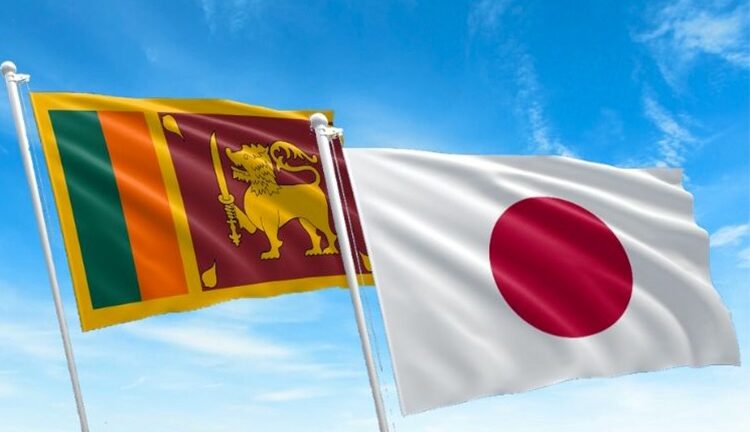
This essay outlines the positions of Japan and Sri Lanka as states, employing concrete contemporary examples to illustrate how state behaviour reflects these two international relations theories on a global level.
Japan’s Realist Turn
Realism asserts that the ultimate goal of a nation-state is to survive. This necessity entails that a state constantly seeks to maximise its power by forging relationships with other states through either coercion or cooperation.
A state can coerce another to act in its advantage by relying on hard power—displaying force through military or economic capabilities—or cooperate by relying on soft power, using natural qualities and positive attraction to cultivate relationships.
In the past, Japan has been more aligned with liberal values, particularly since the post-war period and the establishment of the San Francisco Peace Treaty in 1951. However, in recent years—responding to regional threats from neighbours such as North Korea’s nuclear program and China’s military might, as well as Russia’s invasion of Ukraine—the country has begun to display more realist tendencies in self-defence.
Under the new National Security Strategy adopted in December 2022, the Japanese government decided to allocate approximately 2 per cent of GDP to acquiring longer-range missiles, including 500 U.S.-made Tomahawk cruise missiles, for defence (Koji, 2023).
Although Japan’s military is legally limited to self-defence and peacekeeping under Article 9 of the Japanese Constitution, it is clear that by purchasing advanced weaponry, Japan seeks to deter potential attacks from its neighbours.
In addition to this display of hard power, Japan has utilised soft power by leveraging its Official Development Assistance (ODA) to promote its Free and Open Indo-Pacific (FOIP) initiative. Until the mid-2000s, ODA prioritised economic development in developing countries, maintaining a non-military, non-political stance to ease Asian fears that Japan was regaining military power.
However, from 2015, FOIP has focused on support for maritime law enforcement capacity in the Indo-Pacific region. Under the cover of a values-based diplomacy emphasising democracy, freedom, human rights, and the rule of law, it pursues Japan’s economic interests through infrastructure exports and seeks to counterbalance China by confirming a shared foundation among allies (Hiroaki, 2023).
Taken together, these examples suggest that Japan has gradually begun to utilise more realist principles to prepare for future risks associated with shifting power balances in East Asia.
Sri Lanka’s Balancing Act
Sri Lanka has similarly displayed realist tendencies in recent years. As a small island state located along a major waterway hub—with several important ports and a position connecting key maritime routes—it is crucial for states such as India and China to maintain amicable relations with it (Awad & Todkar, 2021).
China, in particular, one of the great powers, has been central to much of Sri Lanka’s economic trajectory. By 2019, Sri Lanka was in $5.4 billion in debt (Sri Lanka’s foreign policy, 2021), with the funds used for large infrastructure projects, including expressways, airports, and urban development.
Presumably to ensure continued support, Sri Lanka was the first country to support China’s Maritime Silk Road initiative (Kumar, 2017). While Sri Lanka is a small nation, its strategic relationship with China can also deter India, a close neighbour, from exploiting it unduly (Priyadarshani, 2021). This careful balance between the three countries is central to Sri Lanka’s economy and illustrates a realist approach to survival through strategic partnerships.
While the examples above demonstrate Japan and Sri Lanka’s realist attitudes, they do not erase these states’ histories of alignment with liberal positions. Liberalism embodies humanistic ideals alongside economic capitalism. International organisations are widely regarded as key to developing order and improving domestic legal systems.
Another important liberal concept is Democratic Peace Theory: the idea that no two democratic states will go to war against each other, as such a conflict would defy the ideals on which those states are founded.
Japan is a pacifist state, preferring talks and negotiations over military action to resolve conflicts. For example, the country has been an active participant in East Asian summits and ASEAN events, often engaging with so-called “aggressor nations” such as China and North Korea (Bhagwagar, 2022). Furthermore, its contributions to UN peacekeeping missions and its support for the UN Security Council highlight its commitment to international institutions.
In addition to traditional missions such as monitoring ceasefires, Japan’s peacekeeping forces have also been involved in disarmament, demobilisation and reintegration; security sector reform; support in elections, human rights and rule of law; promotion of political processes; and protection of civilians. Japan has conducted missions in Cambodia, East Timor, Haiti, and South Sudan (Japan’s contribution, 2024).
This alliance with international organisations and active participation in maintaining peace across nations illustrate Japan’s liberal positioning.
Liberalism in Practice
Sri Lanka also exhibits liberal tendencies via its continued support of regional organisations such as the South Asian Association for Regional Cooperation (SAARC) and the Bay of Bengal Initiative for Multi-Sectoral Technical and Economic Cooperation (BIMSTEC).
In addition, the state is a member of the Non-Aligned Movement (NAM), founded during the Cold War to advance the economic and political interests of developing Third World nations. Membership enables Sri Lanka to foster amicable relations with all nations without pledging allegiance to any particular power or bloc (Silva, 2024).
Through these platforms, Sri Lanka can promote regional relations and economic cooperation while addressing shared human rights challenges, such as poverty and terrorism. This involvement demonstrates Sri Lanka’s liberal posture and its participation in international democratic affairs.
What the Comparisons Show
The behaviour of Japan and Sri Lanka—and their impact on international affairs—can be understood through the lenses of realism and liberalism, each providing concrete explanations for state action on the world stage. Japan’s realist tendencies are visible in its self-defence acquisitions and strategic relationships through FOIP, while its liberal commitments are reflected in support for international institutions and peacekeeping.
Similarly, Sri Lanka’s realist strategies are evident in its engagement with China and its balancing of relations with India, while its liberal principles are reflected in its participation in regional organisations and its commitment to human rights.
By examining these examples, we gain a deeper understanding of how realism and liberalism shape the contemporary foreign policy behaviour of both nations.
*Fathima Kadhija Mohamed is currently an undergraduate student in the School of International Liberal Studies at Waseda University in Tokyo. She is scheduled to graduate in March 2028 and aims to specialise in International Relations eventually. (IDN-InDepthNews)